
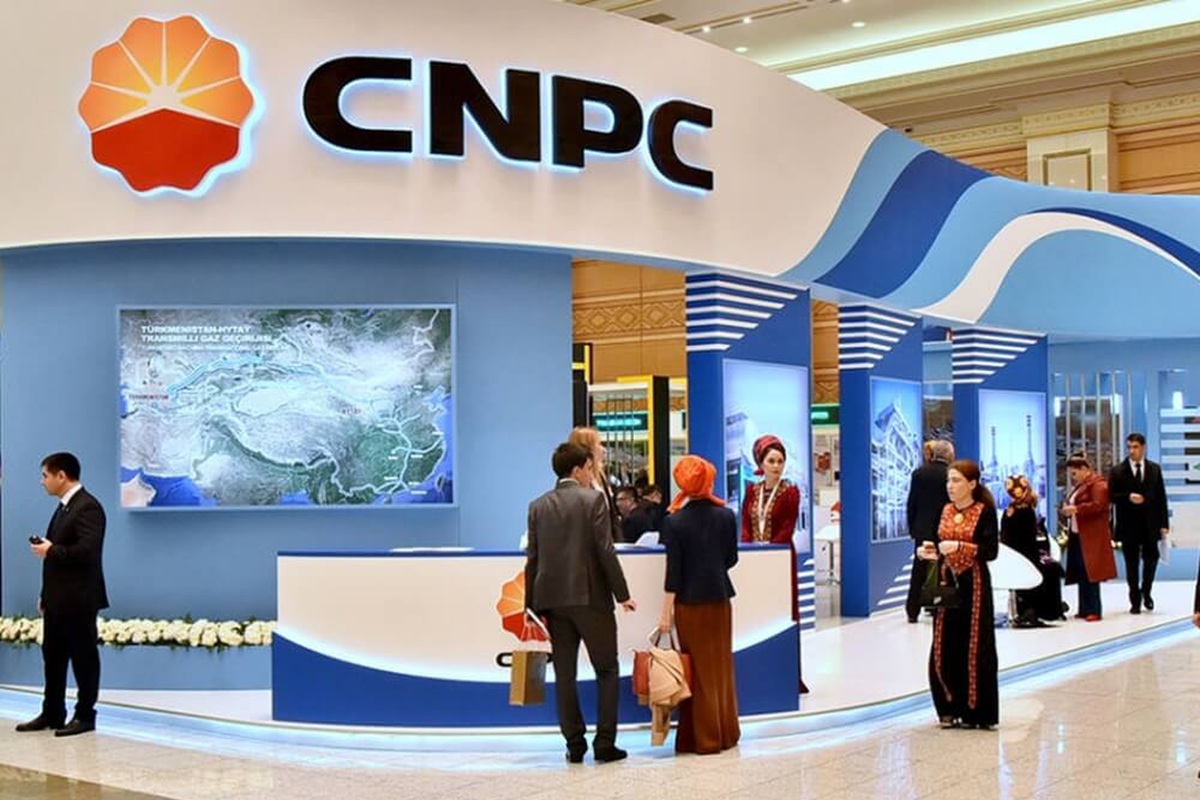
20 years of cooperation with the China National Petroleum Corporation
A special place in the agenda of Turkmenistan–China relations is held by the fuel and energy sector. This year marks the 20th anniversary of the establishment of cooperation between Turkmenistan and the China National Petroleum Corporation (CNPC). This was stated by the National Leader of the Turkmen people, Chairman of the Halk Maslahaty of Turkmenistan, Gurbanguly Berdimuhamedov, during a friendly visit to the People’s Republic of China.
The dialogue, held in an atmosphere of mutual trust, became a vivid demonstration of the two countries’ commitment to a comprehensive strategic partnership and their focus on ensuring sustainable development across the Eurasian region. During this period, a “project of the century” was implemented, serving as an energy bridge between the two friendly states—the Turkmenistan–China gas pipeline.
During the visit, the National Leader of the Turkmen people met with the Chairman of the Board of Directors of CNPC, Dai Houliang. The discussion addressed specific issues related to the further development of the largest gas field, “Galkynyş”. Special attention was given to preparations for the fourth stage of its development, which will significantly increase the export of Turkmen “blue fuel” eastward.
Joint projects with Chinese partners have not only economic but also social significance. The phased development of the “Galkynyş” gas field has created thousands of new jobs. In this regard, the Hero-Arkadag proposed holding an international scientific and practical conference dedicated to the 20th anniversary of productive cooperation with CNPC. This forum will serve as a unique platform for exchanging technological experience.
Regarding regional matters, the National Leader of the Turkmen people emphasized the strategic importance of constructing the Serhetabat–Herat gas pipeline, known as “Arkadagyň ak ýoly.” As an important part of the Turkmenistan–Afghanistan–Pakistan–India transnational gas pipeline, it complements the region’s logistics system and transforms Central Asia into a key hub of Eurasian communications.